Shoot the Gate rules and AI prediction explained
Start with two boundary cards and learn the rules, conditional probability and data analysis. The AI section explains validation and limits; it does not promise profit or the next outcome.
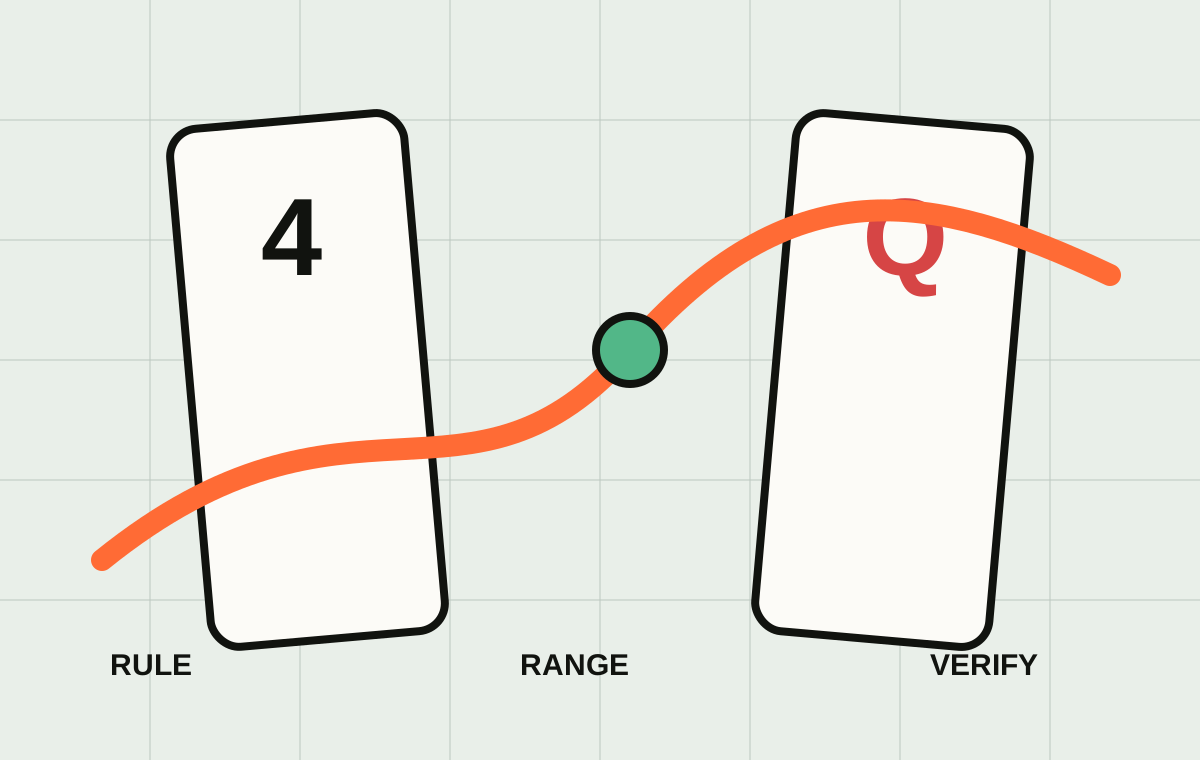
Fix the rules before calculating odds
Shoot the Gate has local variants. Every formula and simulation here states the deck, Ace handling, post rule and scoring convention.
What is Shoot the Gate? Rules and terms
Start with boundary cards, the third card, goal, post and outside.
Shoot the Gate illustrated: comparing rule variants
Use the same 5 and 9 to compare strict, inclusive and Ace variants.
How to calculate Shoot the Gate probability
Count goal, post and outside outcomes in a standard deck without replacement.
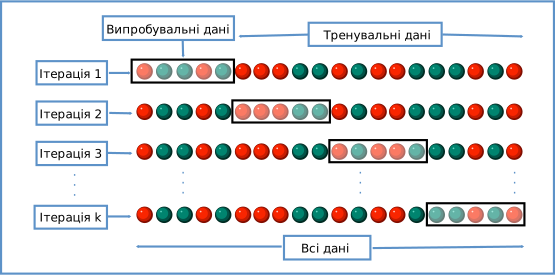
AI is not a label for an output
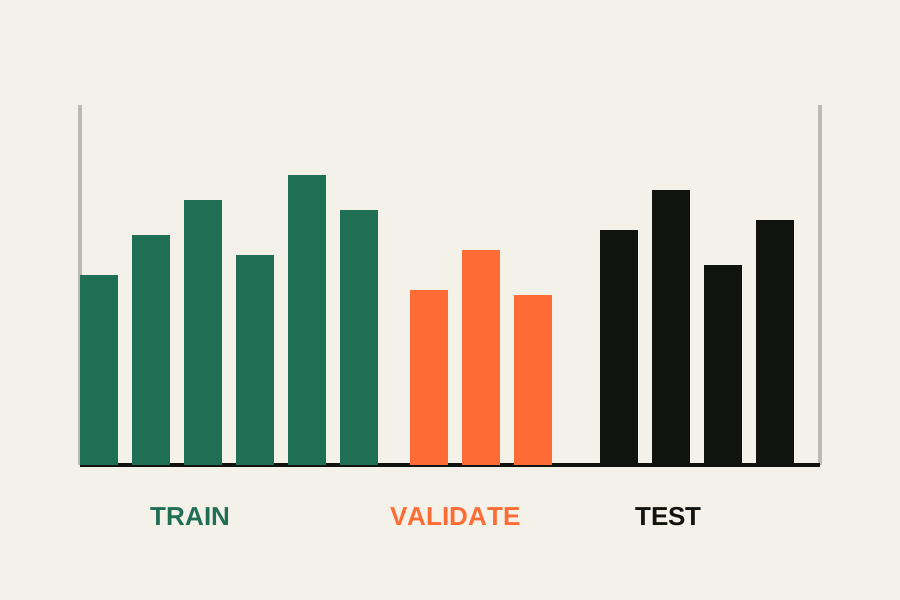
A testable model needs traceable data, chronological splits, a simple baseline and a final set that never influenced training.
- An AI prediction claim should identify input features, target, training procedure and output meaning. Adding historical frequencies is not a trained model.
- A model can beat a rules baseline only if inputs contain stable, repeatable signals available at deployment time.
- Features containing future information, or preprocessing fitted on the test period, create data leakage.
60-second goal simulator
Two cards form the posts. A third rank strictly between them is a goal, a matching rank hits a post, and every other rank is outside.
What this site delivers
The current site contains educational material and a statistical simulation. It is not a prediction model validated on real operational data and does not predict the next round.
Topic guides
Ten independent guides cover rules, records, backtests and how to examine prediction claims.
What is Shoot the Gate? Rules and terms
Start with boundary cards, the third card, goal, post and outside.
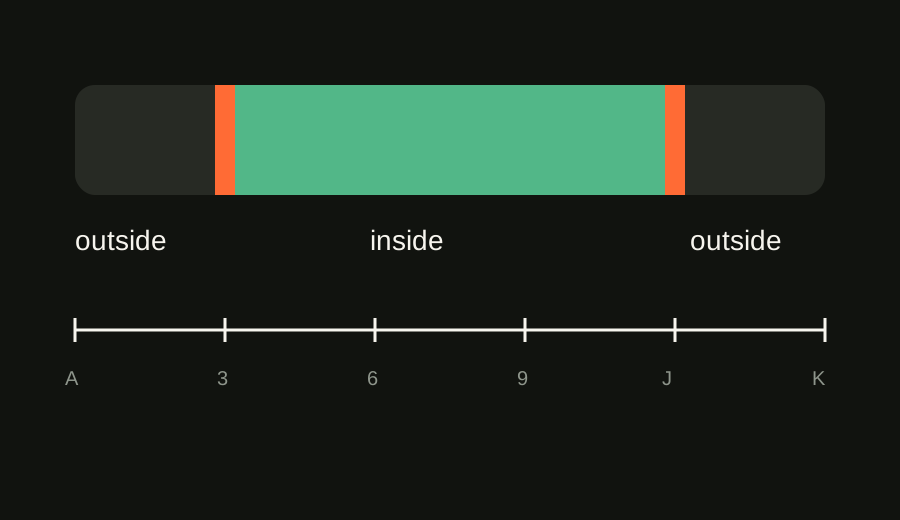
Shoot the Gate illustrated: comparing rule variants
Use the same 5 and 9 to compare strict, inclusive and Ace variants.
How to calculate Shoot the Gate probability
Count goal, post and outside outcomes in a standard deck without replacement.
What does AI prediction mean for Shoot the Gate?
Separate data preparation, statistical estimates, ML models and random displays.
Can AI predict Shoot the Gate outcomes?
Separate rule-based odds, observable bias and unobservable randomness.
How to read Shoot the Gate history
Records describe what happened; they do not automatically reveal the next round.